Few things feel as precious, or as nerve-racking, as watching your newborn sleep. The good news is that a few simple, well-researched steps greatly lower the risk of sudden infant death syndrome (SIDS) and sleep-related accidents. This guide brings together the current advice from the American Academy of Pediatrics (AAP), the CDC, the NIH and the NHS.
This article is general information, not medical advice. If your baby was born early or has a medical condition, ask your doctor or health visitor whether any of this advice is different for them.
Key takeaways
- Always put your baby on their back to sleep, for every nap and every night.
- Use a firm, flat crib or bassinet with nothing else in it.
- Share a room, not a bed, for at least the first 6 months.
- Never fall asleep with your baby on a sofa or armchair.
- Keep the room at 16 to 20°C (61 to 68°F) and your home smoke-free.
Why safe sleep matters
In the US, about 3,400 babies died suddenly and unexpectedly in 2024, according to the CDC. These deaths include SIDS (when no cause is found) and accidental suffocation or strangulation in bed. Most sleep-related deaths happen in the first months of life, but the advice applies until your baby’s first birthday, for every nap and every night.
The basics: Alone, on their Back, in a Crib
A simple way to remember the core rules is the ABCs of safe sleep:
- Alone: your baby sleeps in their own sleep space, with nothing else in it.
- Back: always put your baby down on their back.
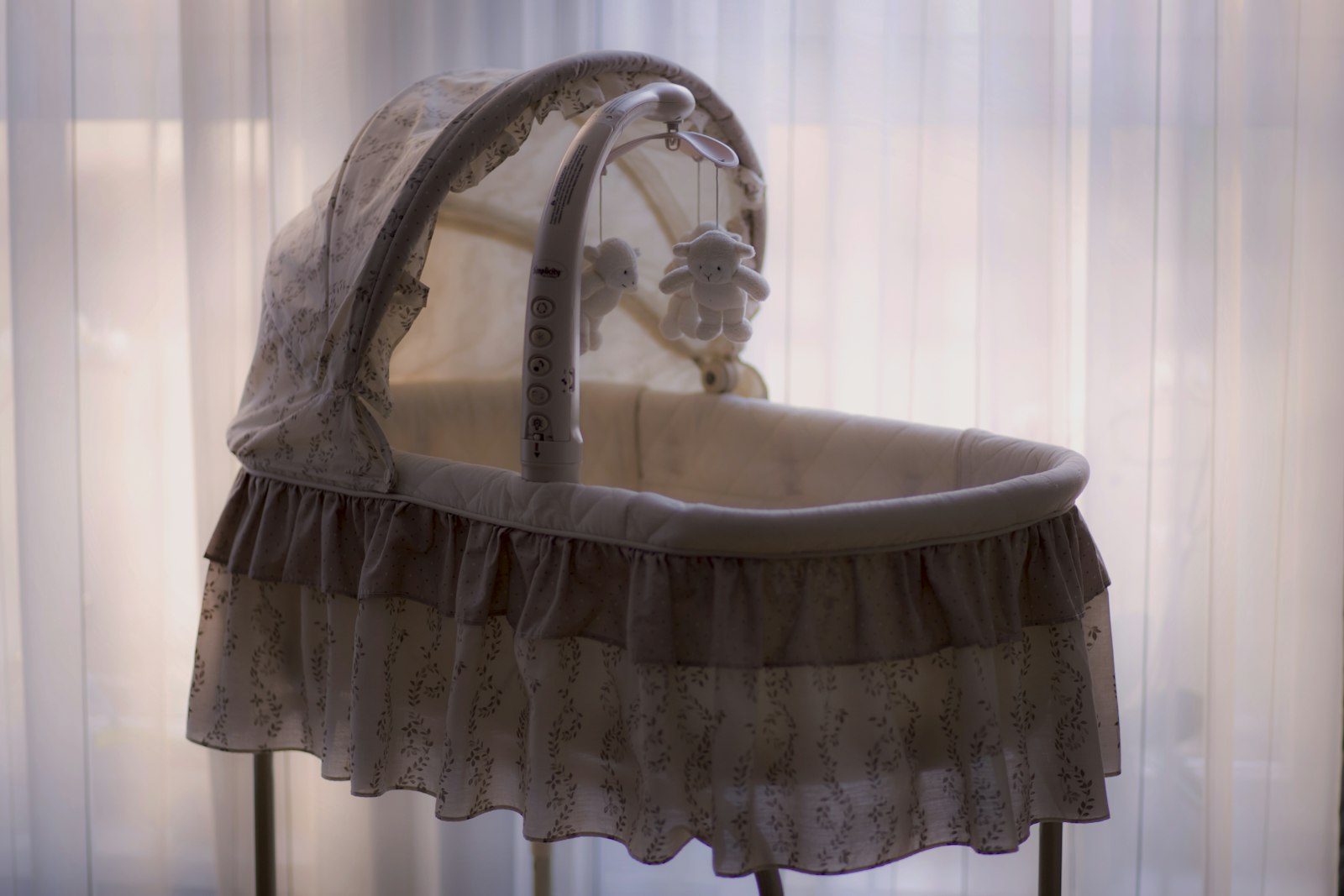
- Crib: a crib, bassinet or Moses basket with a firm, flat mattress.
1. Always put your baby on their back
Put your baby on their back for every sleep, day and night. Side sleeping is not safe either: it’s as risky as sleeping on the tummy.
- Babies who usually sleep on their back but are put on their tummy or side for a nap are at much higher risk, so make sure everyone who cares for your baby knows the rule.
- Babies with reflux should still sleep on their back, on a flat surface.
- Once your baby can roll from back to front and back again on their own, you don’t need to turn them back over. Keep putting them down on their back.
2. Use a firm, flat, clear sleep space
- Use a firm, flat mattress that fits the crib or bassinet, with a fitted sheet and nothing else.
- Keep the sleep space empty: no pillows, quilts, duvets, bumpers, soft toys, loose blankets, sleep positioners, pods or nests.
- No inclined surfaces. The AAP says any sleep surface tilted more than 10 degrees is unsafe. Products not designed for sleep, such as nursing pillows or loungers, shouldn’t be used for sleep.
- In the UK, put your baby in the “feet to foot” position: feet at the bottom of the cot, so they can’t wriggle down under the covers.
- In the US, choose a crib or bassinet that meets current Consumer Product Safety Commission (CPSC) standards.
3. Share a room, not a bed
Keep your baby’s crib or bassinet in your room for at least the first 6 months. The AAP says room-sharing may lower the risk of SIDS by as much as 50%.
Bed-sharing
The AAP and the NIH advise against bed-sharing. The risk is highest when:
- your baby is under 4 months old
- your baby was born early (before 37 weeks) or weighed less than 2.5 kg (5.5 lb) at birth
- you or your partner smoke or vape, have drunk alcohol, or have taken drugs or medicine that makes you drowsy
- you are extremely tired
- the surface is soft, like a waterbed or old mattress
Never sleep with your baby on a sofa, couch or armchair. This is one of the most dangerous places for a baby to sleep: the AAP says it can raise the risk by up to 67 times.
The NHS recognizes that some parents do end up sleeping with their baby. If that happens, it advises a firm, flat mattress, keeping your baby on their back, away from pillows and duvets, not swaddled, and no other children or pets in the bed. It’s still not safe if any of the higher-risk situations above apply.
It’s easy to fall asleep while feeding at night. If you think you might, feed in bed rather than on a sofa, and move your baby back to their own sleep space as soon as you wake.
4. Keep your baby from getting too hot
- The NHS recommends a room temperature of 16 to 20°C (about 61 to 68°F). A room thermometer helps.
- Dress your baby in no more than one layer more than you’d wear to be comfortable.
- No hats indoors for sleep, and never cover your baby’s face or head.
- Keep the crib away from radiators, heaters, fires and direct sunlight. Don’t use hot water bottles or electric blankets.
- Check if your baby is too hot by feeling their chest or the back of their neck. Sweating or a hot chest means they need fewer layers.
- A baby sleeping bag of the right size and weight is a safe alternative to loose blankets.
5. Swaddling: only if you do it safely
Swaddling can help some babies settle, but it does not lower the risk of SIDS. If you swaddle:
- always put your baby down on their back
- keep it loose enough at the hips for the legs to bend up and out
- stop as soon as your baby shows signs of trying to roll, usually around 3 to 4 months
- don’t use weighted swaddles or weighted sleep sacks
6. Car seats, strollers, swings and slings
These aren’t safe places for regular sleep. If your baby falls asleep in one, move them to a firm, flat sleep space as soon as you can.
- Car seats: it’s fine for your baby to sleep in a properly fitted car seat while you travel. Take them out once you arrive.
- Slings and carriers: keep your baby’s face visible and their chin off their chest, keep fabric away from their head, and don’t feed your baby while they’re in a sling.
7. Other things that lower the risk
- Keep your baby smoke-free, during pregnancy and after birth. Don’t let anyone smoke in the same room as your baby, or in the car.
- Breastfeed if you can. Breast milk lowers the risk of SIDS, and any amount helps.
- Offer a pacifier (dummy) at sleep times. If you’re breastfeeding, wait until feeding is well established. Don’t force it, don’t put it back in if it falls out once your baby is asleep, and never hang it around your baby’s neck.
- Keep up with check-ups and vaccines.
Tummy time: for awake time only
Babies need time on their tummy while they’re awake and someone is watching. It strengthens their neck and shoulders and helps prevent flat spots on the head. The AAP suggests building up to 15 to 30 minutes a day by 7 weeks old, in short sessions.
What about baby monitors and special products?
Home heart rate, breathing or oxygen monitors don’t lower the risk of SIDS, and no product can prevent it. Be wary of any product that claims to. An ordinary audio or video monitor can be handy, but it doesn’t replace safe sleep habits.
Quick safe sleep checklist
- On their back, every sleep
- Firm, flat crib or bassinet with a fitted sheet
- Nothing else in the sleep space
- In your room for at least 6 months
- Never on a sofa or armchair with an adult
- Not too hot: 16 to 20°C (61 to 68°F), no hat indoors
- Smoke-free home
- Moved to a flat sleep space after car seats, swings and slings
When to call a doctor
Call 911 (US) or 999 (UK) right away if your baby is not breathing, is blue or grey, is floppy or can’t be woken. For other worries about how your baby sleeps or breathes, talk to your pediatrician, GP or health visitor. If your baby cries a lot and you’re struggling, see our guide on why babies cry and how to soothe them.
Sources
- HealthyChildren.org (American Academy of Pediatrics): How to Keep Your Sleeping Baby Safe: AAP Policy Explained
- CDC: Helping Babies Sleep Safely
- CDC: Data and Statistics for SIDS and SUID
- NIH Safe to Sleep: Ways to Reduce Baby’s Risk
- NIH Safe to Sleep: What Does a Safe Sleep Environment Look Like?
- NHS: Reduce the risk of sudden infant death syndrome (SIDS)
- The Lullaby Trust: Safer sleep advice
Last updated: November 13, 2026